The IPBES Global Assessment is one of the most comprehensive syntheses of research on biodiversity and ecosystems. It documents drivers of change, the state of nature, and the relationships between ecosystems and human well-being. Its influence comes from that synthesis. Its limitation comes from the same source: a global assessment can identify patterns and pressures, but it cannot by itself change what a government, a company or a community decides to do. The distance between evidence and decision is the subject worth examining.
What a global assessment can and cannot do
A synthesis of thousands of studies can establish that biodiversity is declining, name the main drivers, and show how those drivers interact. What it cannot do is tell a specific country which of its own policies to change, because the assessment works at a level of generality that has to be localised before it becomes actionable. That localisation is the work that turns the science into something a decision-maker can use.
Why evidence alone rarely changes behaviour
The assumption that better evidence automatically produces better decisions is one of the most durable myths in environmental policy. Evidence competes with budgets, electoral cycles, vested interests and simple inertia. A finding that a wetland is worth more intact than drained may be true and may still lose to a short-term development proposal. Understanding this does not mean abandoning evidence; it means recognising that evidence has to be connected to the interests and incentives of the people who decide.

From drivers to levers
The assessment identifies drivers such as land-use change, overexploitation, climate change, pollution and invasive species. For policy, the useful step is to translate each driver into a lever: which decision, by whom, would reduce the pressure? Land-use change is driven by many small decisions about how land is used, which means the levers are planning rules, subsidies, tenure and enforcement. Naming the lever is what makes a driver actionable rather than merely alarming.
Biodiversity outcomes are shaped by decisions made far from any environment ministry. Finance ministries set subsidies. Agriculture ministries set production incentives. Local governments set land-use rules. Companies set sourcing and investment. A strategy that addresses only the environment ministry will miss most of the levers. Effective action usually involves convening the departments and actors whose decisions actually drive the pressure.
Measuring what changes
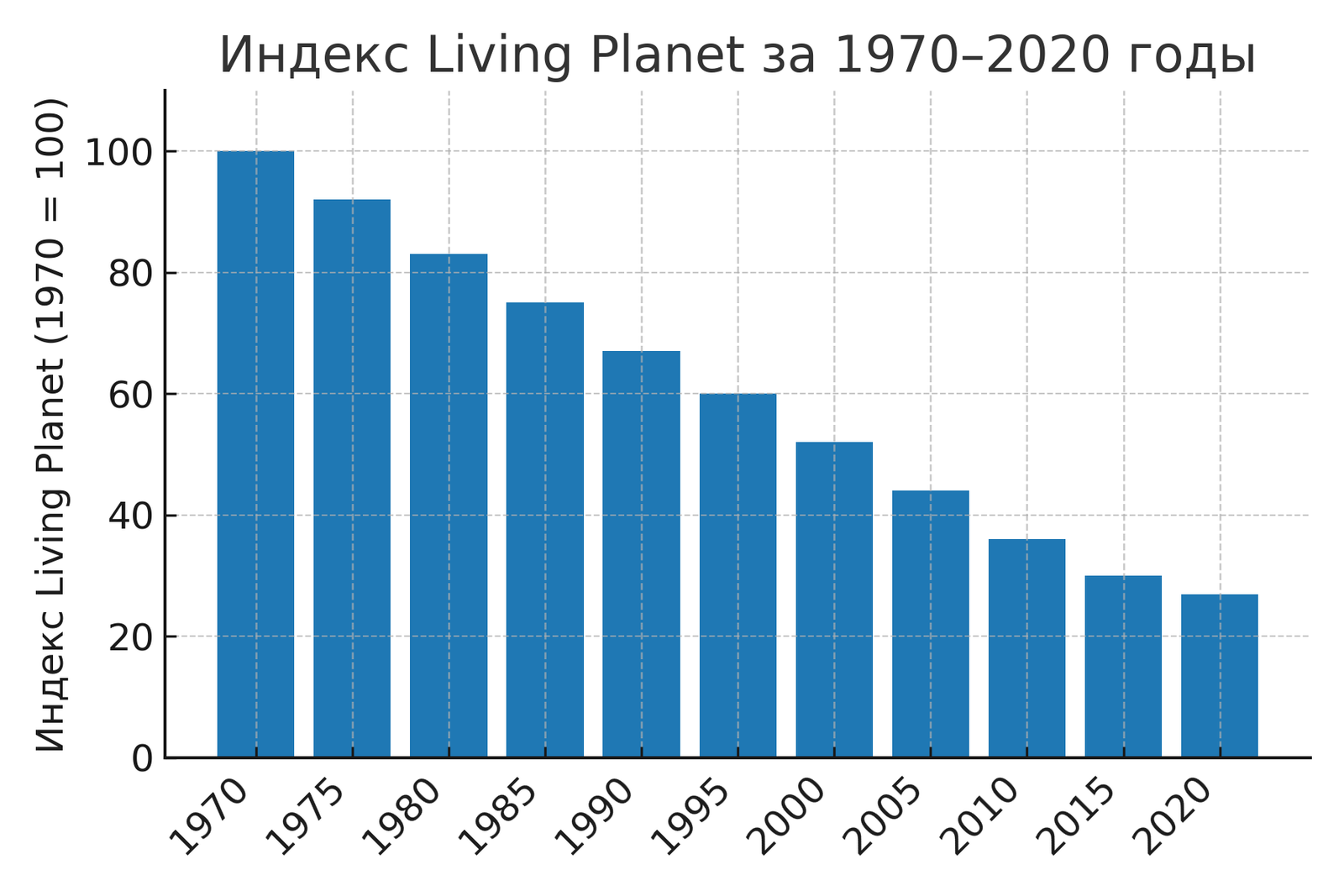
If the goal is to know whether evidence changed anything, the indicators that matter are about decisions, not just outcomes. Has a subsidy been reformed? Has a protected area been enforced? Has a supply chain changed its sourcing? Outcome indicators such as species trends move slowly and are influenced by many factors, which makes them poor guides for near-term accountability. Tracking decisions gives a faster and more attributable signal.
The role of local and indigenous knowledge
Global assessments increasingly recognise that much biodiversity knowledge is held locally, by communities who have managed ecosystems for generations. Incorporating that knowledge is not only a matter of fairness; it improves the evidence base, because local observers notice changes that remote sensing and periodic surveys miss. It also changes the politics, since communities that help produce the evidence are more likely to act on it and to hold others to account.
None of this argues against global assessments. Without them, biodiversity loss would be easier to dismiss as a series of local problems. A synthesis creates the shared factual basis that allows a conversation across countries and sectors, and it raises the political cost of ignoring the issue. Its value is to set the frame; the decisions still have to be made one jurisdiction at a time.
What would make the evidence matter more
Three things help. First, translating global findings into national and local terms, so that decision-makers see their own situation reflected. Second, connecting evidence to the specific levers those decision-makers control. Third, building accountability around decisions rather than only around outcomes. Each of these is a communication and governance task as much as a scientific one — and each is chronically under-resourced relative to the research itself.
Turning evidence into decisions
Biodiversity data matters when it changes decisions, and it changes decisions when it is localised, connected to levers, and owned by the people who must act. A global assessment is a beginning, not an end. Treating it as the finish line produces good reports and unchanged pressures.
Producing a global assessment is a negotiation as well as a scientific exercise. Governments review the summary for policymakers line by line, and the wording of each finding reflects both evidence and diplomacy. This is why assessments can be simultaneously authoritative and cautious: every sentence has been agreed by parties with different interests. Understanding that process helps explain why a report may state a trend clearly while avoiding prescriptive recommendations. It also explains why the technical chapters, which are less heavily negotiated, often contain the sharper analysis. For anyone using the assessment, reading the underlying chapters alongside the summary gives a fuller picture than the headline text alone.
This report draws on the IPBES Global Assessment.
Image: Bureau of Land Management · Public domain · via Wikimedia Commons.