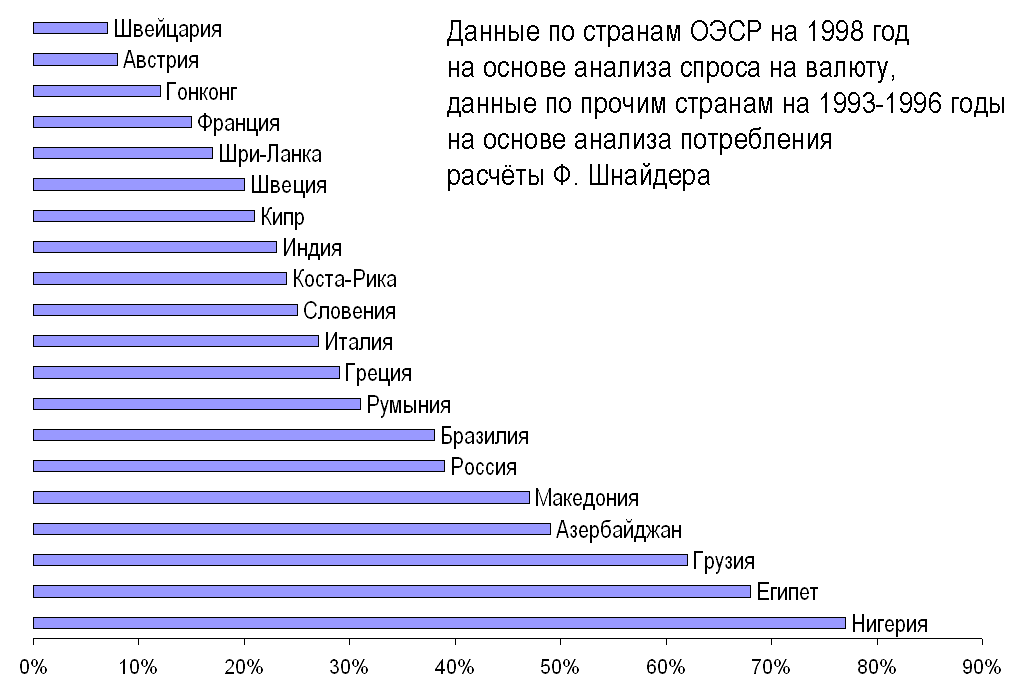
Most work in the world is informal. It happens without a contract, a payslip or a social security record, in small shops, on farms, in homes and on the street. Official statistics struggle to count it, which is why economic policy often overlooks the majority of the workforce it is meant to serve.
What informal work includes
Informality covers own-account traders, family farm labour, domestic workers, casual construction labour and small workshops. Some of it is a choice; much of it is the only option available. The common feature is the absence of the protections and entitlements that formal employment carries.
Why it persists
Formal employment requires an employer large enough and stable enough to register, pay taxes and comply with labour rules. Where such employers are scarce, and where the cost of formalisation is high, work stays informal. Regulation designed for large firms can make it harder for small ones to become formal.
Informal workers lack pensions, health cover, paid leave and protection against dismissal. They are more exposed to shocks and less able to plan. Because they are invisible to labour statistics, they are also less likely to be reached by policy, which creates a cycle in which their needs are systematically underweighted.
The cost to the state
Informal work reduces the tax base and the contributions that fund social insurance. That limits what governments can spend on services, which in turn reduces the value of formalising. Breaking that circle requires making formalisation worthwhile for both workers and employers.
Simpler registration, lower compliance costs, gradual benefits and enforcement that does not destroy livelihoods. Countries that have expanded coverage often did so by decoupling basic protections from formal employment, using non-contributory schemes financed from general revenue.
Digital payments and records
Digital payments create a record of economic activity, which can help workers build a history and access credit. They also create a data trail that some workers and employers prefer to avoid. The technology is neutral; how it is used determines whether it helps or exposes.
Women are over-represented in informal work, particularly in domestic and home-based activity, and often in the least visible forms. That means policies aimed at formal employment miss them disproportionately, and the gap in social protection is wider than the headline figures suggest.

Why the issue is underweighted
Informal workers are dispersed, often unorganised and rarely represented in the forums where labour policy is made. Their invisibility in statistics reinforces their absence from debate. Changing that requires deliberate effort to count and include them.
Surveys and labour-force statistics capture some informal work and miss much of it. Definitions differ between countries, which makes comparison difficult. The result is that the size of the informal economy is estimated with wide margins, and policy is made on an uncertain base.
The role of unions
Traditional unions represent formal employees, and informal workers are often outside their reach. New forms of organisation, including cooperatives and associations of street traders, have emerged to fill the gap. Their influence is limited, and they are frequently the only voice informal workers have.
Some countries expanded social protection by making benefits universal rather than tied to employment, which reached informal workers directly. Others simplified registration and offered gradual entitlements. There is no single recipe, and the successful cases share a willingness to finance benefits from general revenue.
The digital platform question
Platform work is a growing form of informality, with drivers and delivery workers classified as independent contractors. It offers flexibility and little protection, and the question of whether these workers are employees is being contested in courts and legislatures. The outcome will shape a significant share of future work.
Surveys of informal workers generally find that they want security and predictable income rather than a particular legal category. Access to health care, a pension and protection from arbitrary dismissal matter more than the label. Policy that focuses on classification alone may miss what people actually need.
Informality persists as a structural feature that growth will not resolve on its own. It is a structural feature of many economies, and addressing it requires deliberate policy on social protection, registration and enforcement. The alternative is to keep making policy for a minority of workers.
Policy debates about informality often assume that formalisation is unambiguously better, and the evidence is more mixed. Formal status brings protection and also costs, and for some workers the trade-off is not worth it. Designing schemes that make formalisation genuinely attractive is the harder task.
The direction of policy matters here. Treating informal workers as a problem to be eliminated tends to produce enforcement that punishes the poor. Treating them as workers with legitimate needs produces measures that extend protection gradually, and that is the approach with the better record.
This report draws on International Labour Organization (ILO) and World Bank.
Image: Wikimedia Commons · CC0 · via Wikimedia Commons.