Antimicrobial resistance — the ability of bacteria and other microbes to survive the drugs designed to kill them — is one of the most serious threats to global health, and it keeps getting worse. The World Health Organization lists it among the top global health threats, and surveillance shows resistance rising in many countries. The reasons are well understood. The difficulty is that the solutions cut across medicine, agriculture and economics, and each of them is hard to implement.
What resistance actually is
Resistance belongs to microbes, not to people. When bacteria are exposed to an antibiotic, most die, but a few may survive because of random mutations or genes they have acquired. Those survivors multiply, and the drug stops working against them. Every use of an antibiotic, appropriate or not, gives resistant strains an advantage. Resistance is therefore an inevitable consequence of using these drugs at all — the question is how fast it develops and how much we slow it.
Why does it happen so fast?
Bacteria reproduce in minutes and can exchange genetic material, including resistance genes, even between different species. That means resistance can spread far faster than it evolves in a single lineage. Hospitals, where sick patients, heavy antibiotic use and close contact coincide, are ideal environments for this. So are crowded settings such as farms. The speed of bacterial evolution is what makes the problem urgent: once a resistance gene is widespread, it is very hard to reverse.
How big is the problem?
Estimating deaths from resistance is difficult, because resistance often contributes to a death rather than causing it alone. A widely cited study attributed a substantial number of deaths directly to resistant infections each year, with millions more associated. The WHO’s surveillance network, GLASS, tracks resistance patterns across countries and has shown high rates of resistance in common infections in many settings. Whatever the precise figure, the direction is clear, and the burden falls hardest where health systems are weakest.
What drives overuse?
Several forces push unnecessary prescribing. Patients may expect antibiotics and doctors may prescribe to meet that expectation or to avoid a difficult conversation. Diagnostic tools are often unavailable, so clinicians treat empirically. In some countries, antibiotics are sold without prescription. And in agriculture, antibiotics are used routinely for growth promotion and disease prevention in livestock, a practice that creates resistance reservoirs. Each driver has its own remedy, and no single intervention addresses all of them.
Why the drug pipeline is thin
New antibiotics are hard to develop and unprofitable to sell. A successful new antibiotic is typically held in reserve and used sparingly, precisely to preserve its effectiveness, which means low sales. The cost of development is high and the failure rate is steep. As a result, few companies invest, and the pipeline of genuinely new classes is limited. This is a market failure that governments have tried to address with incentives, prizes and advance purchase commitments, with limited success so far.
What about agriculture?
A large share of global antibiotic use is in animals, and resistance that emerges on farms can reach people through food, water and the environment. Reducing routine use for growth promotion, improving animal husbandry and hygiene, and setting targets for veterinary use are the standard recommendations. Progress varies widely: some countries have banned growth-promotion use, while in others it remains common. Because the benefit is diffuse and the cost falls on producers, action requires regulation.
What can be done
The measures that work are unglamorous and cumulative: better infection prevention and hygiene, so fewer infections occur in the first place; rapid diagnostics, so antibiotics are used only when needed; stewardship programmes in hospitals; restrictions on agricultural use; surveillance to detect resistance early; and investment in new drugs and alternatives. Each reduces pressure a little, and together they can slow the advance. None of them is a single fix, which is part of why progress is slow.
Why it keeps getting worse anyway
Resistance is a collective-action problem. The benefit of using an antibiotic accrues to the individual patient or farmer, while the cost — a less effective drug for everyone — is spread across society and into the future. That structure makes restraint hard to sustain without coordination, and it explains why good intentions at the bedside are not enough. Progress requires policy that changes incentives, not just education that appeals to conscience.
Vaccines, hygiene and the less obvious levers
Reducing reliance on antibiotics is not only about prescribing better. Vaccines prevent the infections that would otherwise be treated, and improved water, sanitation and hygiene reduce the spread of disease in the first place. In hospitals, hand hygiene, isolation of infected patients and careful use of catheters and ventilators prevent the infections that drive resistance. These measures are unglamorous and highly effective, and they are often underfunded relative to the search for new drugs. The strongest resistance strategies combine prevention with stewardship, because the fewer infections there are, the less pressure there is to use antibiotics at all.
Sources
- World Health Organization (WHO). Antimicrobial resistance. who.int
- WHO. GLASS: Global Antimicrobial Resistance Surveillance System. who.int
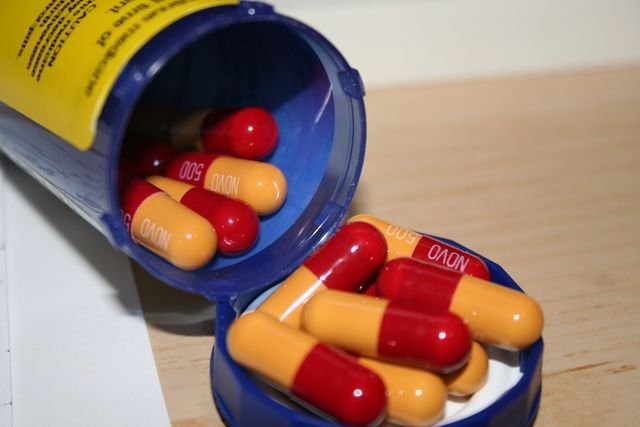
Image: Bmramon at English Wikipedia · CC BY-SA 3.0 · via Wikimedia Commons.